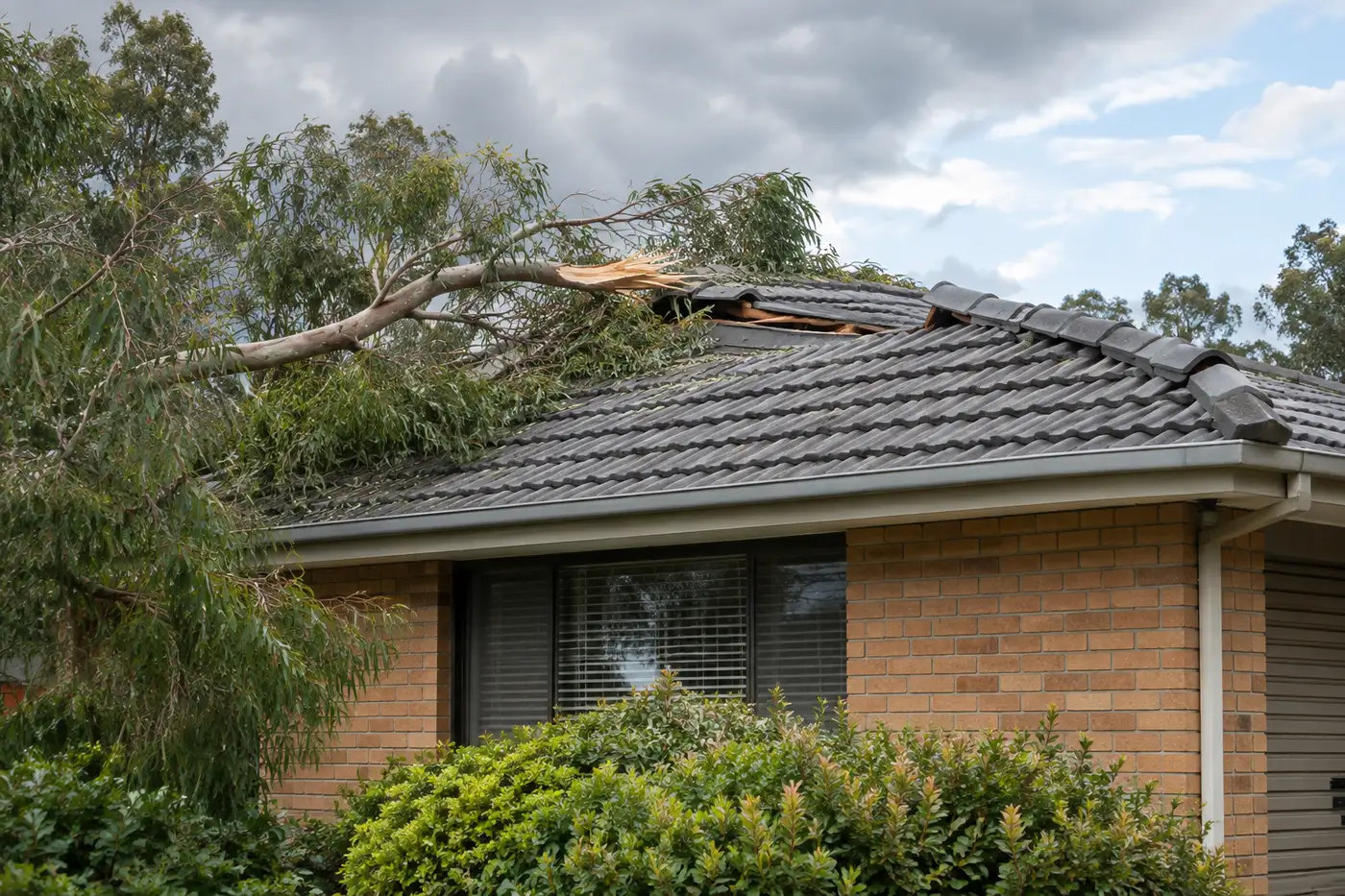
The storm rolls through late on a summer afternoon. Twenty minutes of wind, rain sideways, maybe some hail. Then it's gone, and you step outside to find a branch on the roof, a ridge cap sitting in the garden bed, or water dripping through the laundry ceiling. Storm damage roof repair in Canberra usually starts exactly like this: suddenly, at a bad time, with more rain on the way.
Here's what we'd tell a neighbour to do in the first few hours, what storm damage actually looks like, and how a quick temporary fix turns into a repair that lasts.
Safety comes before the roof
A damaged roof can wait an hour. You can't. If a tree or large limb has come down on the house, stay out of the rooms under it until someone has looked at it, because a loaded ceiling can give way without warning. If there are fallen power lines anywhere near the property, keep well clear and treat every wire as live.
Inside, water near light fittings, downlights or switches is the one thing not to ignore. Turn that circuit off at the switchboard and leave it off until the ceiling has dried and been checked.
And please don't climb up for a look. Wet tiles are slippery, storm-loosened tiles move underfoot, and metal sheets are like glass in the rain. Most of the damage that matters can't be judged from a ladder anyway.
What you can safely do in the first few hours
Nearly all of the useful work at this stage happens inside the house and at ground level.
- Put buckets or towels under drips and move furniture, rugs and electronics out of the way.
- If a ceiling is bulging with water, keep people out of that room.
- Take dated photos from the ground and from inside: the roof, anything lying in the yard, stains and wet patches.
- Pick up any broken tiles or capping in the garden and keep them. They help match replacements.
If water is pouring in and you can't get a roofer before the next downpour, the ACT State Emergency Service (SES) helps with emergency tarping after storms. That is a stopgap to keep water out, not a repair, and after a major event their crews are stretched across the whole city.
What storm damage usually looks like on a Canberra roof
Hail gets the headlines, and we've written separately about the hail damage you can't see from the ground. Wind and falling debris do a different kind of damage, and it tends to be more obvious.
Lifted and missing ridge caps
The ridge caps along the top of a tile roof are held by bedding and pointing (the mortar or flexible compound underneath and along the edges). When that has gone brittle with age and frost, a strong gust can lift caps clean off. On the exposed, elevated streets of Bruce, Hawker and Weetangera in Belconnen, wind-lifted ridge caps are one of the most common repairs we do.
Slipped and broken tiles
Wind gets under a loose tile and flips it, or knocks it down the roof into the next row. One missing tile leaves a hole straight through to the sarking or the ceiling below.
Lifted metal sheets and flashings
On Colorbond and older metal roofs, wind pulls at the edges. If the fixings are tired, a sheet or a length of flashing (the folded metal that seals the joins) can start to peel back. Once wind is under it, every gust makes it worse.
Branch and debris impact
On leafy streets a falling limb can crack a run of tiles, dent sheets and crush gutters in one hit. Even small branches can snap tiles if they land hard.
Overflow leaks
Sometimes nothing is broken at all. The rain simply came faster than blocked gutters and valleys could carry it away, so water backed up under the roof edge. It looks like a roof leak inside, but the fix is different.
A temporary fix and a permanent repair are two separate jobs
This is the part that surprises people. After a storm the first job is to stop more water getting in, whatever the roof looks like. That might mean refitting a few tiles, sealing a lifted flashing or tarping a section. It is fast and it is meant to be temporary.
The permanent repair comes after, once the roof is dry and someone can properly work out what failed and why. A ridge that lost three caps in a gust usually has loose bedding along the whole run, not just where the gap is. A leak through the laundry ceiling might have come in two metres away. Water travels along battens and sarking before it drips, which is why a ceiling stain rarely sits right under the leak.
Our approach is simple. Urgent leaks are prioritised, we get you watertight first and sort the detail after, and we never leave a roof open overnight. Then we come back and do the repair properly: rebedded ridges, matched tiles, sealed flashings and fasteners. If you want to see how that works end to end, our storm and leak repair service sets it out.
Storm damage or old wear? It matters
Storms have a habit of finding the weak spots a roof already had. Pointing that was cracking for years finally lets go. A valley that was rusting quietly under leaf litter finally leaks. Both are real problems, but they aren't the same as damage the storm itself caused.
That difference matters if you're thinking about an insurance claim. We don't give advice on policies or claims, and what's covered is between you and your insurer. What we can do is inspect the roof and give you a dated photo report that separates genuine storm damage from existing wear, so the repair scope is right. We never inflate a claim. An honest, well-evidenced report is what helps the rest go smoothly, and it's worth getting before repairs start and before you lodge anything.
Some parts of Canberra cop it harder
Storms don't hit every suburb the same. The Tuggeranong Valley's open, low-lying aspect funnels summer storm cells straight across the suburbs, so wind and hail there are often worse than across town. Belconnen's elevated streets catch the wind. Older suburbs with mature trees see more branch damage, while the newer, open estates in Molonglo have little to shelter them when a cell comes through.
We're based in Giralang, so after a storm we can usually get to roofs across the north side quickly, and we cover the whole of Canberra and Queanbeyan.
Get the roof checked before the next storm finds it
If a storm has been through your street and you've got a leak, a branch on the roof or tiles in the garden, call us on (02) 6109 5008. We'll make it safe and watertight first, then give you a clear photo report and a written quote for the permanent fix. We're licensed roof plumbers (ACT Roof Plumber Licence 242220C), and selected work carries a warranty of up to 15 years. Whether it's one cap or a whole ridge, book a storm damage repair and we'll tell you straight if anything else up there needs watching.