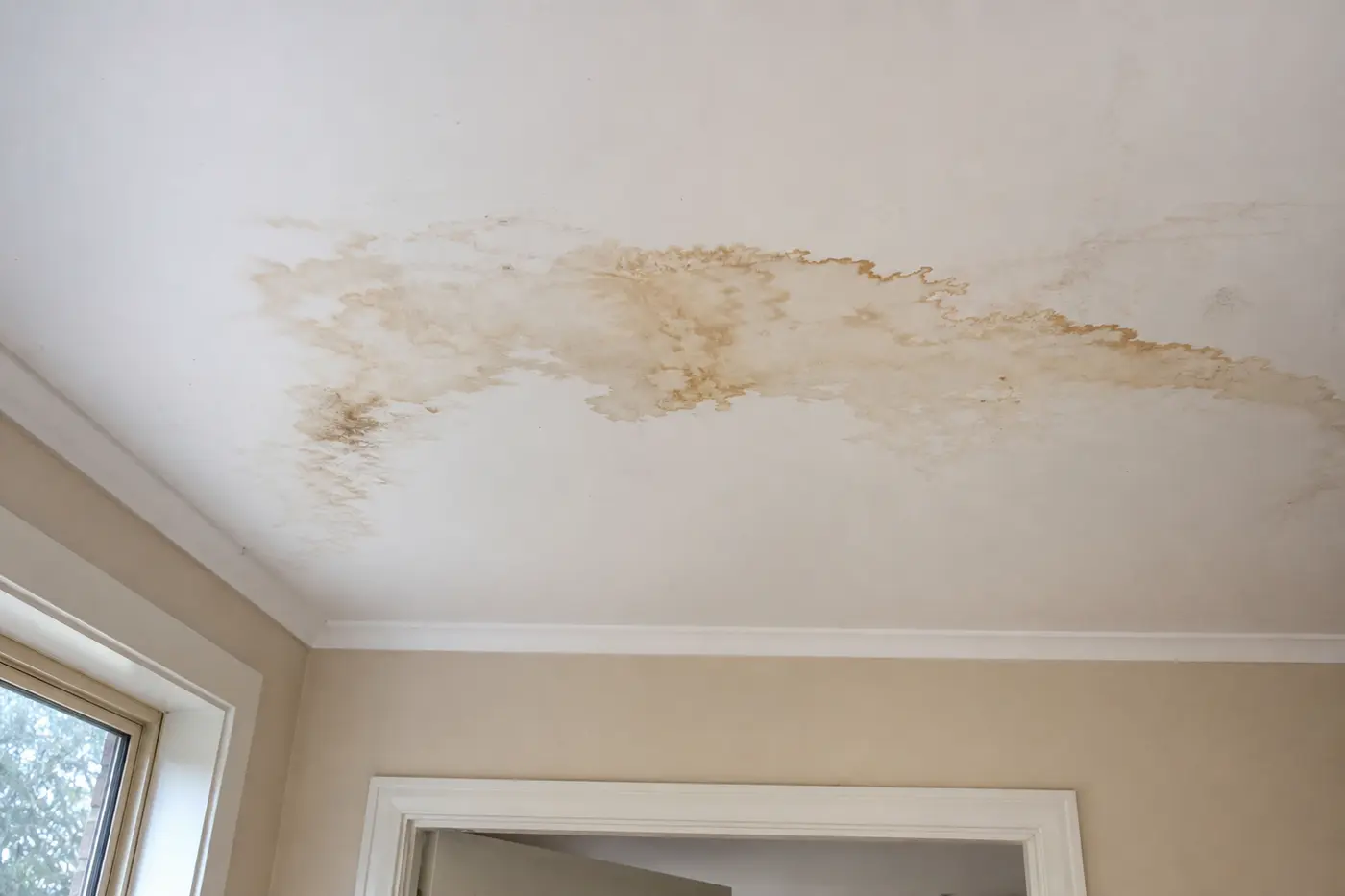
You notice it after a wet week. A faint brown ring on the ceiling in the corner of a bedroom, or a patch above the hallway that wasn't there before. It might be the size of a coaster, it might be the size of a dinner plate, and it has that tell-tale tea-coloured edge. Nine times out of ten, a water stain on the ceiling like that means water is getting in through the roof, and it's been getting in for longer than you'd think.
The good news is that a stain caught early is usually a small fix. The bad news is that the stain is the last thing to show up, not the first, so it pays to understand what you're actually looking at before you decide what to do.
The stain is water, and water leaves a trail
That brown mark is what's left behind after water has soaked through the plasterboard and dried out. As it travels it picks up dust, timber tannins and whatever's sitting in the ceiling cavity, then it dries and leaves the ring. A darker, sharper edge means it's been wetting and drying over and over. A soft, spreading patch that feels damp means water is still coming in right now.
Here's the part that catches people out. The stain almost never sits directly under the leak. Water gets in at one point up on the roof, runs along a batten or across the top of the sarking (the foil-backed underlay under the tiles), then drips down wherever it finds a low point or a ceiling joint. We've traced leaks that showed up two or three metres from where the water was actually getting in. That's why poking a hole where the stain is rarely tells you anything useful, and why finding the real entry point is a job for someone up on the roof.
What usually lets water in on a Canberra roof
Most of the leaks we get called to in Canberra come down to a handful of causes, and the local climate drives a lot of them.
- Cracked or slipped tiles. One broken tile is all it takes. Canberra's frost is a big culprit here: water soaks into a hairline crack, freezes overnight, expands, and splits the tile wider by morning.
- Failed pointing and bedding. The mortar along the ridge caps goes brittle and crumbles with age, and the freeze-thaw cycle speeds that up. Once it's gone, wind-driven rain gets straight under the caps.
- Worn valleys and flashings. The metal channels in the roof's folds, and the seals around chimneys, vents and skylights, are common leak points once they rust or lift.
- Gutters that can't cope. On our leafy, tree-heavy streets gutters block fast, and once they overflow the water backs up under the edge of the roof instead of running away. If your stain sits near an outside wall, blocked gutters are worth ruling out first. We wrote a whole piece on what blocked gutters quietly do to a roof if that sounds like your place.
- Storm and hail damage. A single big storm can crack tiles or dent and split metal in a way that only shows up as a ceiling stain weeks later. If the timing lines up with recent weather, our guide to spotting hail damage on a Canberra roof is a good place to start.
How to tell how worried you should be
Not every stain is an emergency, but a few signs mean you shouldn't sit on it. Press gently near the mark (from a stable step, not a wobbly chair). If the plaster feels soft, spongy or bulges at all, water is still up there and the ceiling can eventually let go under the weight. A sagging patch, paint that's bubbling or flaking, or a musty smell in the room all point to an active, ongoing leak rather than an old dried-out one.
One thing that is a genuine safety issue, not just a repair: water near light fittings, downlights or anywhere close to wiring. If a stain is spreading toward a light, switch that circuit off at the board and keep clear of it until it's been looked at. Water and electricity in a ceiling cavity is not something to wait out.
Painting over it won't fix anything
It's tempting to hit the stain with a coat of stain-block and move on, especially if it looks old and dry. If the leak is genuinely fixed, sealing and repainting is fine. If it isn't, the stain will bleed straight back through within a season, usually a bit bigger than before, and you've spent the effort for nothing. This is the single most common thing we hear: "I painted it last winter and now it's back." The paint was never the problem. The water was.
So the order matters. Find and fix the way in first, let the cavity dry out, then deal with the cosmetic side. Getting the source sorted is where proper roof leak repairs earn their keep, because a roofer who traces the leak to its actual cause fixes it once, rather than chasing the stain around the ceiling. As licensed roof plumbers (ACT Roof Plumber Licence 242220C), the valleys, flashings and pointing that cause most of these leaks are exactly the detail we deal with day to day.
What to do the day you spot one
You don't need to panic, but don't file it under "deal with it later" either. A leak that's small and cheap now becomes sarking, insulation and ceiling damage if it runs through a wet Canberra winter. If it's actively dripping, put a bucket under it and gently pierce a bulging patch with a screwdriver to let trapped water drain in a controlled way, so it doesn't collect and bring the whole sheet of plaster down. Then get someone up there while it's still just a roof job and not a ceiling replacement.
A proper look sorts it out. We start with a free roof inspection and a photo report, so you can see the actual cause with your own eyes rather than taking our word for it, and know whether it's a single cracked tile or something more. Any repair worth doing should also come with a real warranty, and we back selected work for up to 15 years. If there's a fresh water stain on your ceiling, book an inspection and let's find where it's really coming from before the next downpour. A roof built Canberra-tough, hail, frost and all.