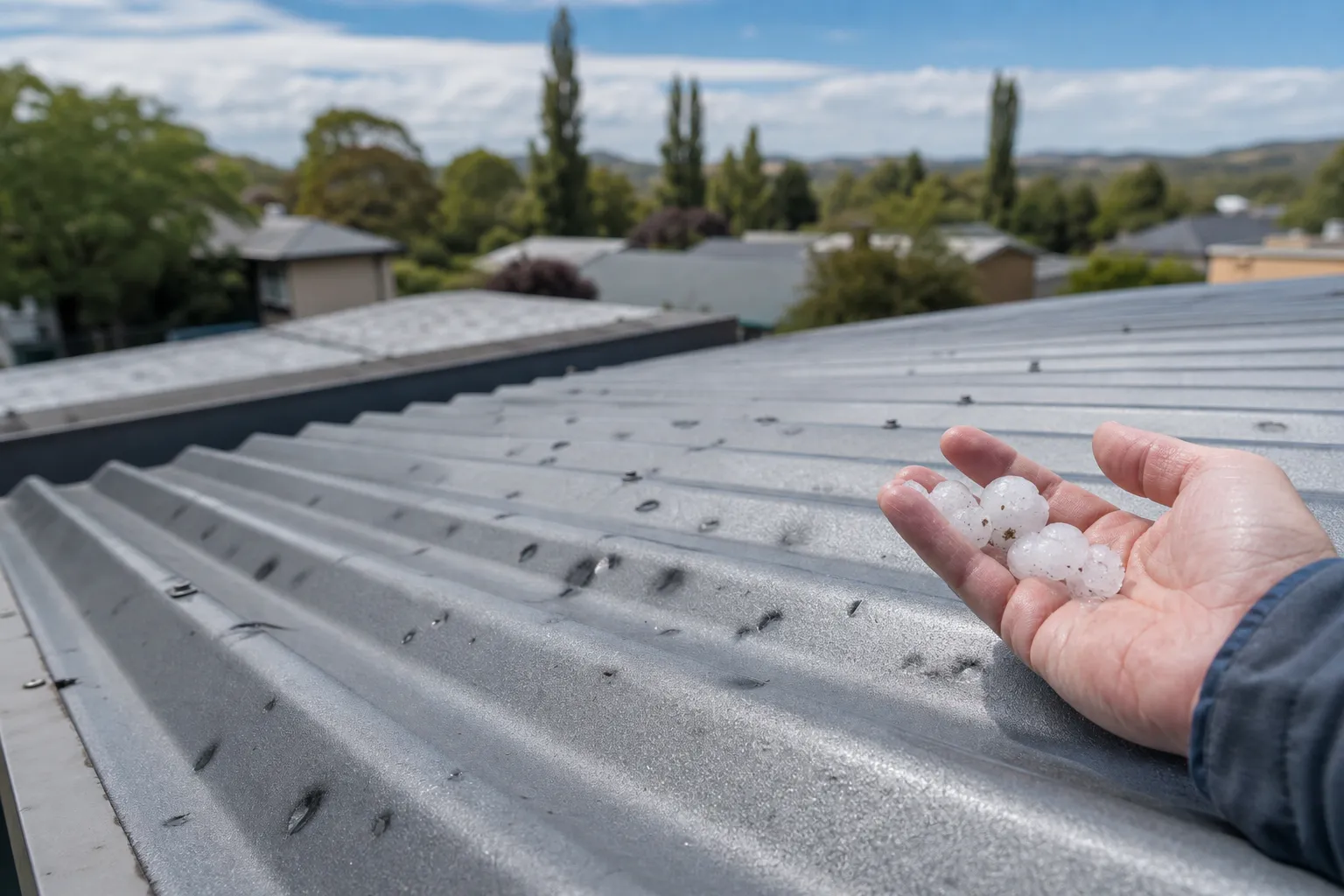
Canberra gets more than its share of violent hail. Our hot, unstable summer afternoons build towering storm cells that drop ice the size of marbles — sometimes golf balls — across whole suburbs in minutes. The 2020 storm that swept the ACT is still fresh for many homeowners, and smaller hail events roll through most storm seasons. The tricky part is that hail rarely puts a hole straight through your roof. It bruises, cracks and dents in ways you can't see from the driveway, then lets water in quietly for months afterward.
This guide explains what hail does to tile and metal roofs across Canberra, the damage that hides from a ground-level look, why it pays to document everything early, and how to tell whether a repair will do or a full restoration makes more sense.
What hail does to a tile roof
Concrete and terracotta tiles are hard, but they're also brittle — and hail hits with real force. A direct strike can crack a tile clean through, chip a corner, or knock the protective surface glaze and coating off in small craters. Even where a tile doesn't visibly break, the impact can create hairline fractures that only open up later under Canberra's freeze-thaw cycling, when trapped water freezes and widens the crack.
The damage isn't limited to the tiles themselves. Hail batters the mortar bedding and pointing along ridges and hips, loosening capping that was already tired. It dents and splits valley irons and flashings — the metal channels that carry the most water on your roof — and those are exactly the spots a small leak turns into a big one. On an older tile roof, a serious hailstorm can accelerate years of wear into a single afternoon.
What hail does to a metal roof
People assume Colorbond and steel roofs shrug hail off. They're tougher than tile, but they're not immune. Hail dents the pans of the sheeting, and while a dent alone may not leak, each impact can fracture the paint and protective coating. Once that finish is broken, bare metal is exposed to Canberra's frosts and rain, and rust starts from those tiny points and spreads outward over the following seasons.
Hail also works on the fasteners and flashings. It can back out or damage screws and their rubber washers, split ridge capping, and dent gutters and downpipes so they no longer drain properly. Skylights and whirlybirds — vulnerable plastic and thin-metal fittings — often take the worst of it and can crack outright. A metal roof that looks fine from the ground can be compromised across dozens of small points, which is why metal roof leak detection after a storm is worth doing properly rather than eyeballing.
The damage you can't see from the ground
This is the part that catches Canberra homeowners out. From the footpath, a hail-hit roof usually looks normal — the impacts are on horizontal surfaces you can't see, and dents in steel or bruises in a tile don't cast an obvious shadow. Yet the damage that matters most is often the hardest to spot:
- Granule and coating loss that leaves surfaces dull or patchy, only visible up close on the roof plane.
- Hairline tile cracks that don't leak today but fail after the next hard frost.
- Bruised or spider-cracked tiles that ring hollow but look intact.
- Dented or split valleys and flashings hidden in the roof's folds and behind chimneys.
- Backed-out fasteners and damaged washers on metal roofs, each one a potential entry point.
- Gutter dents and debris that stop water draining and push it back under the eaves.
Because none of this is visible from below, a lot of hail damage goes unrepaired until a ceiling stain appears — sometimes a full season later, well after the storm most people would connect it to. A proper on-roof roof inspection with a photo report is the only reliable way to know what your roof actually copped.
Why you should document damage early
After a hailstorm, the single most useful thing you can do is create a clear, dated record of the condition of your roof — before you arrange any repairs and before you contact anyone. Photographs of cracked tiles, dented sheets, damaged flashings and full gutters, taken safely and time-stamped, give you an honest baseline. If more damage reveals itself weeks later, you can show it was consistent with the storm rather than ordinary wear.
Documenting early also helps you get accurate, comparable quotes. When a roofer can see exactly what the hail did — ideally through inspection photos taken from the roof — you get a scope of work based on the real damage, not guesswork. We're not offering advice about insurance policies or claims here; that's a conversation for you and your insurer. What we can say is that a thorough, dated photo record of your roof's condition is worth having before work begins. Just don't climb up after a storm to get those photos yourself — wet, hail-loosened tiles and slick metal are dangerous. Leave the on-roof documentation to a licensed roofer.
Repair or restoration: which does your roof need?
Not every hail-damaged roof needs a big job. The right answer depends on how widespread the damage is and how much life the roof had left before the storm.
When a repair is enough
If the hail was localised — a handful of cracked tiles, one dented valley, some loose pointing on an otherwise sound roof — targeted roof repairs are usually the sensible, cost-effective fix. We trace each fault to its cause, replace the broken tiles or flashings, re-secure fasteners and make the roof watertight again. On a roof that was in good shape before the storm, this restores it fully without over-capitalising.
When restoration makes sense
When hail has damaged coating and glaze across a wide area, knocked out pointing along most of the ridges, and landed on a roof that was already aging, patch repairs become a losing game — you fix one spot and another fails nearby. Here a roof restoration is the better value: we clean the whole roof, replace broken tiles, re-bed and repoint the ridges with flexible compound, then re-seal and re-coat the surface so it's protected against the next season's frost and hail. It costs more than a spot repair up front but far less than living with recurring leaks.
When replacement is the honest answer
Occasionally hail is the final straw for a roof near the end regardless — widespread structural cracking, or a metal roof rusting through from years of earlier coating damage. In those cases we'll tell you straight that a new roof is the wiser long-term spend. An inspection tells us — and you — which of these three you're looking at.
Frequently asked questions
Does hail damage ruin a roof?
Not always, but it can shorten a roof's life significantly if it's left unaddressed. The real problem is cumulative: cracked glaze and coating expose the material underneath to Canberra's frost and rain, and small fractures widen over time. Caught early, most hail damage is repairable. Ignored, it turns into leaks and rot.
What does minor hail damage look like on a roof?
Subtle. On tiles, look for small chips, craters where the surface coating has been knocked off, and dull spots. On metal, look for shallow dents in the pans and tiny fractures in the paint. Dented gutters and downpipes are often the most visible clue from the ground that the roof above copped a hit.
How soon after a storm should I get my roof checked?
Sooner is better — ideally within a few weeks. The damage is easiest to link to the storm while it's fresh, and getting ahead of it means you fix cracks before the next frost drives water into them. A free inspection with photos gives you a clear picture.
Get your Canberra roof checked after hail
Hail damage is deceptive — the roof looks fine from the ground while trouble builds out of sight. Whether you're in Belconnen, Tuggeranong, Gungahlin or the inner suburbs, our licensed local team knows exactly what Canberra hail does to tile and metal roofs and how to find the damage others miss. If a storm has been through your street, book a free inspection and photo report. We'll show you what the hail actually did and give you an honest call on whether a repair, a restoration or a replacement is the right next step — a roof built Canberra-tough, hail and all.