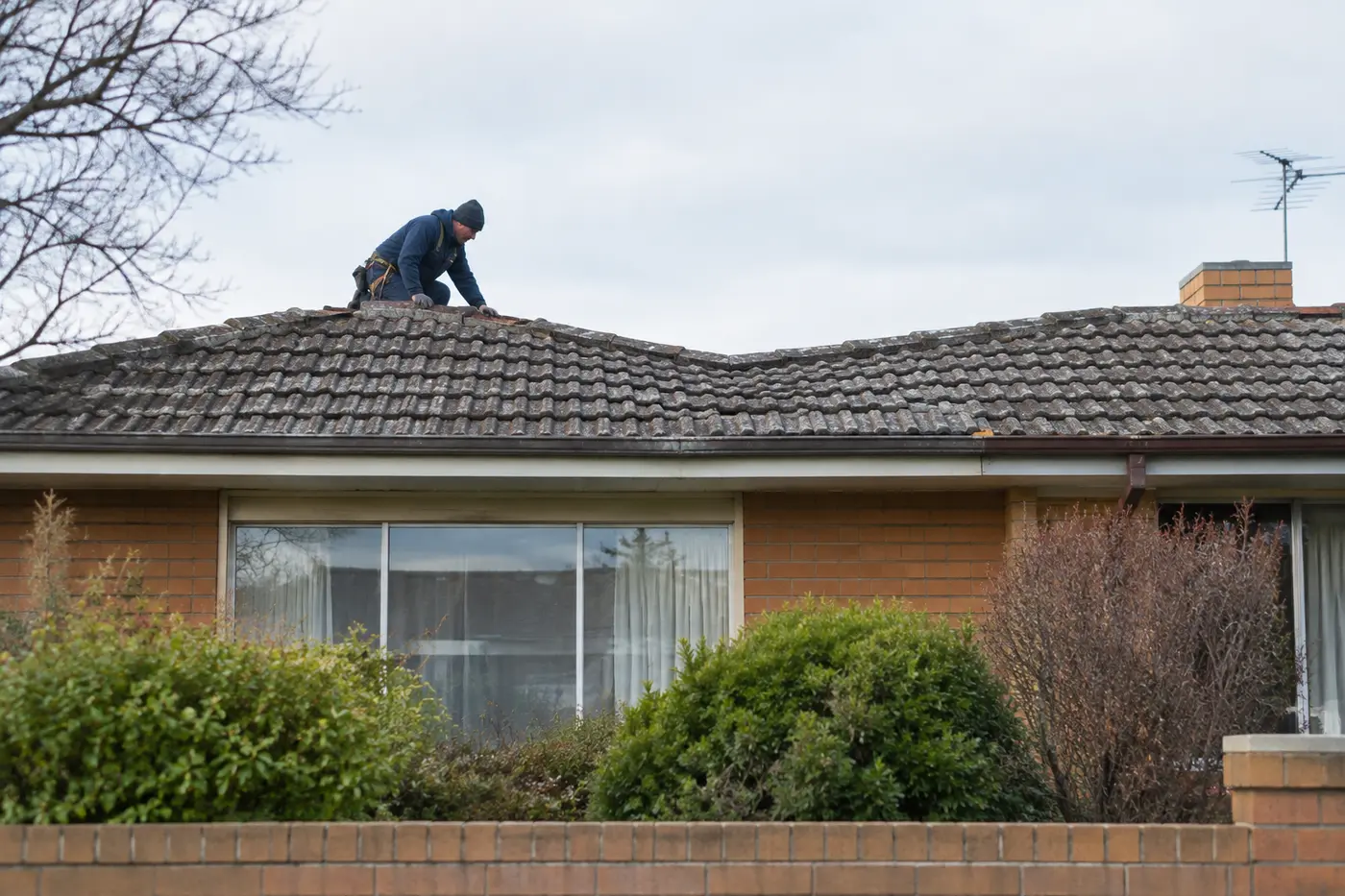
You notice it from the footpath while you're bringing the bins in. The ridge along the top of the house isn't straight any more. It dips in the middle, or one patch of tiles seems to slump between two firm lines. You can't remember whether it has always looked like that, and now you can't stop seeing it.
A sagging roof is one of the calls we take most seriously, because it is a structural question, not just a weatherproofing one. Some dips have been there for decades and aren't going anywhere. Others mean timber is failing right now. Here's how we tell the two apart on Canberra homes, what usually causes the sag, and what fixing it actually involves.
A slight wave is common, a growing dip is not
Very few older roofs are dead straight. Many of the homes we look at in Belconnen, Woden Valley and the inner suburbs had their roofs framed on site, with rafters cut from timber that was never perfectly even. After decades of carrying concrete or terracotta tiles, a gentle wave across the tiles or a slight dip in a long ridge is normal. If it looked the same in photos from ten years ago, it has most likely settled and stopped.
What worries us is change. A dip that is new, deeper than it was last winter, or sitting right over a spot that has leaked is telling you something is still moving. So is a sag that turns up alongside other signs inside the house.
Signs you can check without a ladder
Please stay off the roof. A roof that is sagging may not carry your weight where you expect it to, and that is before you count loose tiles and frost on a winter morning. Most of the useful clues can be seen from the ground or from inside:
- a ridge line that dips instead of running straight from end to end
- rows of tiles that drop between two firmer lines, like a hammock between posts
- a gutter or fascia that droops in the middle of a run
- new cracks in the ceiling or cornice, especially ones that follow a line
- a damp patch or stain on the ceiling under the low spot
A photo is your best tool. Take one from the same spot across the street now and another in a few months. If the line has changed, you have your answer.
A ceiling that is bulging downward is a separate and more urgent problem. It usually means water is sitting on the plaster, and it can come down. Keep everyone out of that room and get someone out the same day. Our guide to tracking a ceiling stain back to the roof leak explains what happens next.
What makes a Canberra roof sag
Water that has been getting in for years
This is the cause we find most often. A slow leak at a valley, a flashing or a cracked ridge drips onto the same piece of timber every time it rains. That timber stays damp, softens and eventually rots. Battens (the horizontal strips the tiles hang from) go first, then the rafters if the leak has been there long enough. By the time the roof line dips, the leak above it is usually years old.
Heavy tiles on an ageing frame
Concrete tiles are heavy, and a lot of the homes built across Canberra in the 1970s and 80s carry them. Timber under constant load slowly bends over the years, the same way a bookshelf bows under one row of books. Undersized rafters, long spans and missing supports all make it worse.
Changes made inside the roof space
The roof space is where ducted heating, evaporative cooling, downlights and skylights all get fitted, and not every installer knows which pieces of timber are holding the roof up. It isn't unusual to find a strut or brace that was cut or moved to make room for ductwork. Extensions cause the same trouble when a new roof is joined to the old one without the right support.
Walls being pushed outward
Rafters push outward at the bottom as well as down. On a sound roof, the ceiling joists tie the walls together and stop that happening. If one of those connections fails, the rafters spread, the tops of the walls lean out slightly and the ridge drops in the middle. Cracks at the top corners of internal walls are a common hint.
Storms and falling branches
A big limb landing on the roof can crack a rafter outright. Hail and wind are more likely to break tiles and let water in, which leads back to the first cause a few years later.
How serious it is depends on which timber is moving
A sag in the battens is local. You'll see a shallow dip across a small patch of tiles, usually right under a leak. It is a repair, not an emergency, though it should be done before the next wet season.
A sag in the rafters or trusses is a bigger deal. Rafters are the main sloping timbers, and trusses are the factory made triangular frames used in most newer homes. When these bend or fail, a whole run of the roof is affected and it can keep getting worse. A ridge that drops in the middle, with cracks opening in the walls or ceiling below, sits at the serious end.
Call promptly if the dip appeared suddenly, if it followed a storm or a fallen branch, or if you hear creaking or cracking from the roof space.
A sag can't be fixed from the top
Coating or repointing a sagging roof only puts a fresh finish over a frame that is still failing. We would rather tell you that than take the job. The tiles in the low area have to come off so the timber underneath can be seen and repaired.
What happens next depends on what we find. Rotten battens can be replaced and the tiles relaid on a straight line, along with fixing the leak that rotted them in the first place. Where rafters have bowed or a support has been cut, the frame needs strengthening, and that is structural work. If the problem is in the main frame, we'll say so plainly, and a structural engineer's view is worth having before anyone quotes a fix.
Sometimes the sag is a sign the whole roof has reached the end. Sagging rooflines and failed battens are among the signs we look for when deciding a roof is past restoring. In that case a full re-roof with the timbers checked and repaired underneath is the better answer. Many Canberra owners switch from heavy tiles to lightweight Colorbond at the same time, which takes a lot of dead weight off the frame for good. Removing and carting away the old roof is part of the job, and we never open more roof than we can make watertight the same day.
The price depends on what is under the tiles
We can't give a fair figure over the phone, because two roofs that look the same from the street can have very different problems inside. A few rotten battens under one valley is a contained repair. Strengthening rafters across a whole roof, or replacing it, is a much bigger job. What moves the price is how far the damage has spread, whether the main frame needs work, the size and pitch of the roof, and whether a re-roof is the smarter spend. Our guide to what sets the price of a new roof in Canberra covers the bigger end of that range.
Get the dip checked before winter sets in
A dip in the roof line rarely fixes itself, and whatever caused it is usually still at work. Our roof inspections are free and come with a photo report, so you can see what we found rather than taking our word for it. We're licensed roof plumbers (ACT Roof Plumber Licence 242220C), and selected services carry a 15-year warranty (conditions apply). To arrange a look, visit our roof replacement page or call (02) 6109 5008.