It rained hard overnight. In the morning there's a brown ring on the hallway ceiling and a damp patch on the carpet underneath. Once you've worked out where to put the bucket, the next question is usually about money: does home insurance cover roof leaks, or is this one on you?
The honest answer is that it depends, and mostly on one thing. Not how bad the leak is, but what caused it. We're roofers, not insurance advisers, so we won't tell you what your policy says. What we can explain is how the roof side of a claim tends to work, because we see it from the top of the ladder after nearly every big Canberra storm.
The cause of the leak decides it, not the leak itself
Home insurance is generally built around sudden events. A hailstorm, a strong wind, a falling branch. Damage that happens over years is a different matter. Mortar that cracked slowly through a dozen winters, a valley that rusted through under leaf litter, or rubber washers that perished on an old metal roof are usually treated as wear and tear or maintenance, and policies commonly exclude those.
So two leaks that look identical from inside the house can end up with very different outcomes. One came through a tile that hail cracked last Tuesday. The other came through a ridge that's been letting go for five years and finally gave way in the same storm.
The document that actually decides it is your policy's product disclosure statement (the PDS, the long booklet that came with your policy). The sections to read are the ones on storm, water damage and exclusions. Some policies treat damage inside the house, like the ceiling and carpet, differently from the repair to the roof itself, so check both. If anything is unclear, ring your insurer and ask before you assume.
Storms find the weak spots a roof already had
This is where most of the confusion comes from, and it's especially common in Canberra. Our freeze and thaw winters crack rigid ridge pointing over time. Most of the tile roofs we work on in suburbs like Belconnen and Tuggeranong are decades old, with the original pointing long past its best. Then a summer storm comes through, and the first places to fail are the ones that were already weak.
An assessor looking at that roof is asking a simple question: did the storm cause this, or did it just reveal it? Often the honest answer is a bit of both. A gust might lift three ridge caps that were sitting on crumbling bedding. The storm did lift them. The bedding was also shot.
We've written separately about what to do in the first hours after storm damage, including staying safe and getting water out of the house. This post picks up where that leaves off.
What usually reads as storm damage, and what reads as wear
No roofer can promise how an insurer will see a particular roof. But these are the patterns we see on Canberra jobs, and they line up with how claims are usually talked about.
Damage that tends to point to a single event:
- tiles freshly cracked or holed by hail, often on the side facing the storm
- ridge caps or tiles blown off, with clean breaks and no weathering on the exposed edges
- metal sheets or flashings peeled back by wind
- impact damage from a branch, with the branch still there or nearby
Damage that tends to point to age and upkeep:
- cracked pointing along the whole length of a ridge, not just one spot
- rust holes in valley irons or flashings
- perished washers on fasteners, common on metal roofs over 20 years old
- overflow leaks from gutters packed with leaves and moss
- old sealant patches that have dried out and split
Plenty of roofs show items from both lists. That's normal, and it's exactly why a clear report helps.
What you do in the first few days shapes how a claim goes
Most of the useful work happens before anyone lodges anything.
Take photos straight away, inside and out, from the ground. Stains, wet patches, anything lying in the yard, and the roof itself as best you can see it. Your phone dates them for you. Keep any broken tiles or capping you find in the garden. Don't climb up, because a wet, damaged roof is genuinely dangerous and the important damage often can't be judged from a ladder anyway.
Policies generally expect you to take reasonable steps to stop the damage getting worse, which usually means a temporary make-safe: refitting a few tiles, sealing a lifted flashing or tarping a section. Keep the invoice for that. Then call your insurer early and ask whether they want to send their own assessor before any permanent repair is done. Getting the order wrong, with the roof fully fixed before anyone has seen it, can make things harder than they need to be.
What a roofer's report adds, and what it can't do
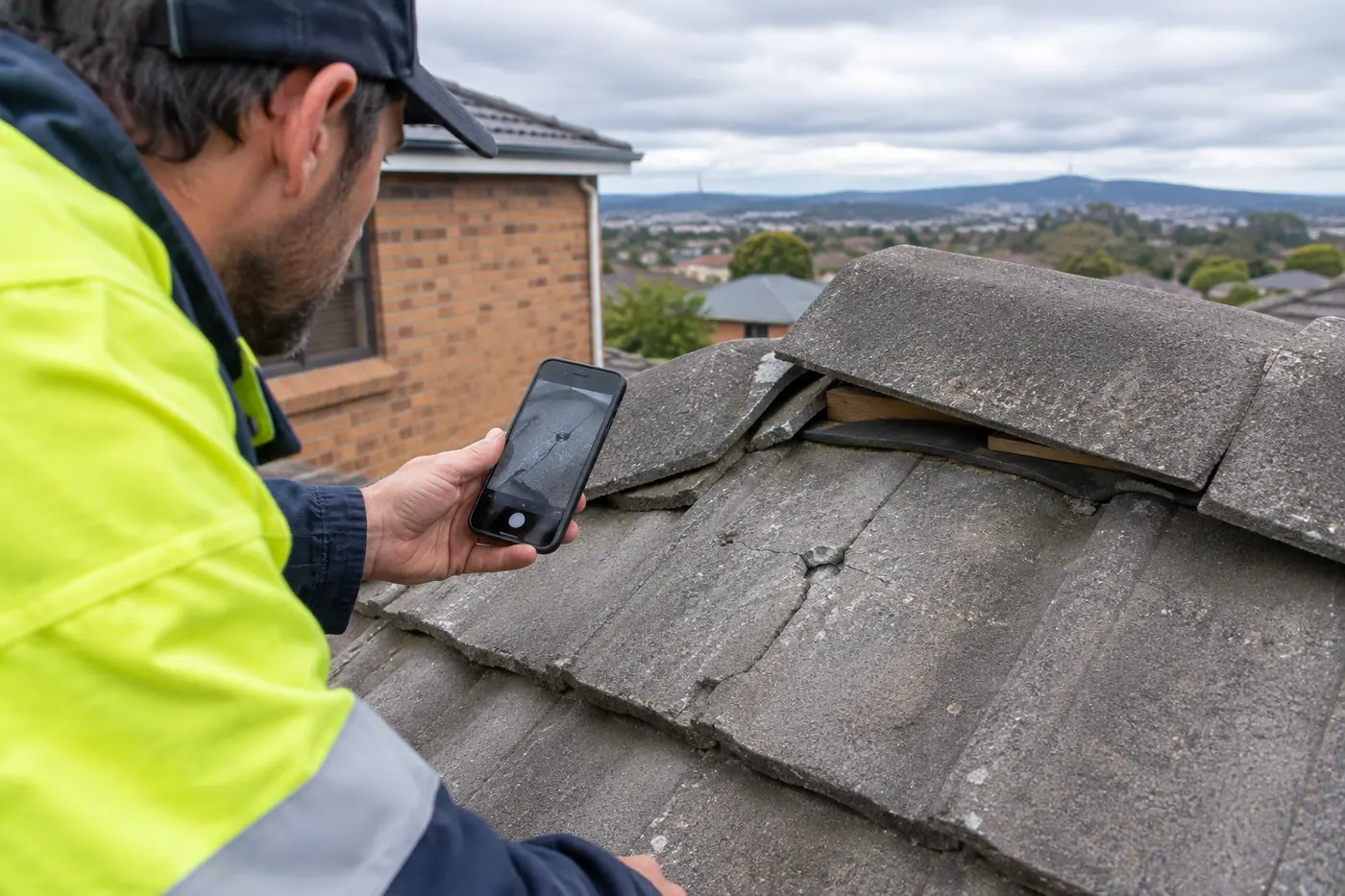
A good report gives your insurer something solid to look at. Ours include dated photos of the damage, where the water actually got in, what caused it, a plain separation of storm damage from existing wear, and a written quote for the repair. For storm-related work we provide insurance-ready photo reports, and we've worked alongside assessors after Canberra's major hail events.
Finding the real entry point matters more than people expect. Water runs along battens and sarking before it drips, so the stain is often metres from the hole. A report that pins the leak to the wrong spot helps nobody, which is why we put effort into tracing a leak back to its source before writing anything down.
What a report can't do is decide whether you're covered. That's between you and your insurer. And we never inflate a claim. An accurate, well-evidenced report is what helps a genuine claim go through cleanly, and anything else puts the homeowner at risk, not the roofer. If you need the roof assessed and documented, our leak and storm repair team does the inspection, the photo report and the fix.
A new home leak may be a builder question first
On newer homes, like the recent Colorbond builds across Molonglo Valley, a leak in the first few years is often a defect: a flashing that was never sealed properly, or a roof penetration without a proper boot. That can be a matter for your builder before it's an insurance matter. If your home is near new, check what your building contract and the builder's obligations say, and get the leak documented either way.
If the claim is knocked back for wear and tear
It happens, and it's stressful. If you disagree with the decision, ask your insurer to explain the reasons in writing and to tell you about their complaints process. If you still can't resolve it, the Australian Financial Complaints Authority (AFCA) handles disputes with insurers and doesn't charge consumers to lodge a complaint.
Either way, the roof still needs fixing before the next rain finds the same gap. A clear report helps here too, because it shows what's urgent and what can wait. And if the reason given was widespread wear, that's worth taking seriously. Leaks popping up in different spots usually mean the roof's surface life is up, and a string of patch repairs may cost more over time than dealing with the whole roof.
Get the leak documented before it's repaired
If you've got a leak and you're thinking about a claim, call us on (02) 6109 5008. We'll make it watertight first, then give you a dated photo report and a written quote you can pass to your insurer. We're licensed roof plumbers (ACT Roof Plumber Licence 242220C), and selected work carries a warranty of up to 15 years, conditions apply. Have a look at our roof repair service to see how we handle leaks from first call to final fix.