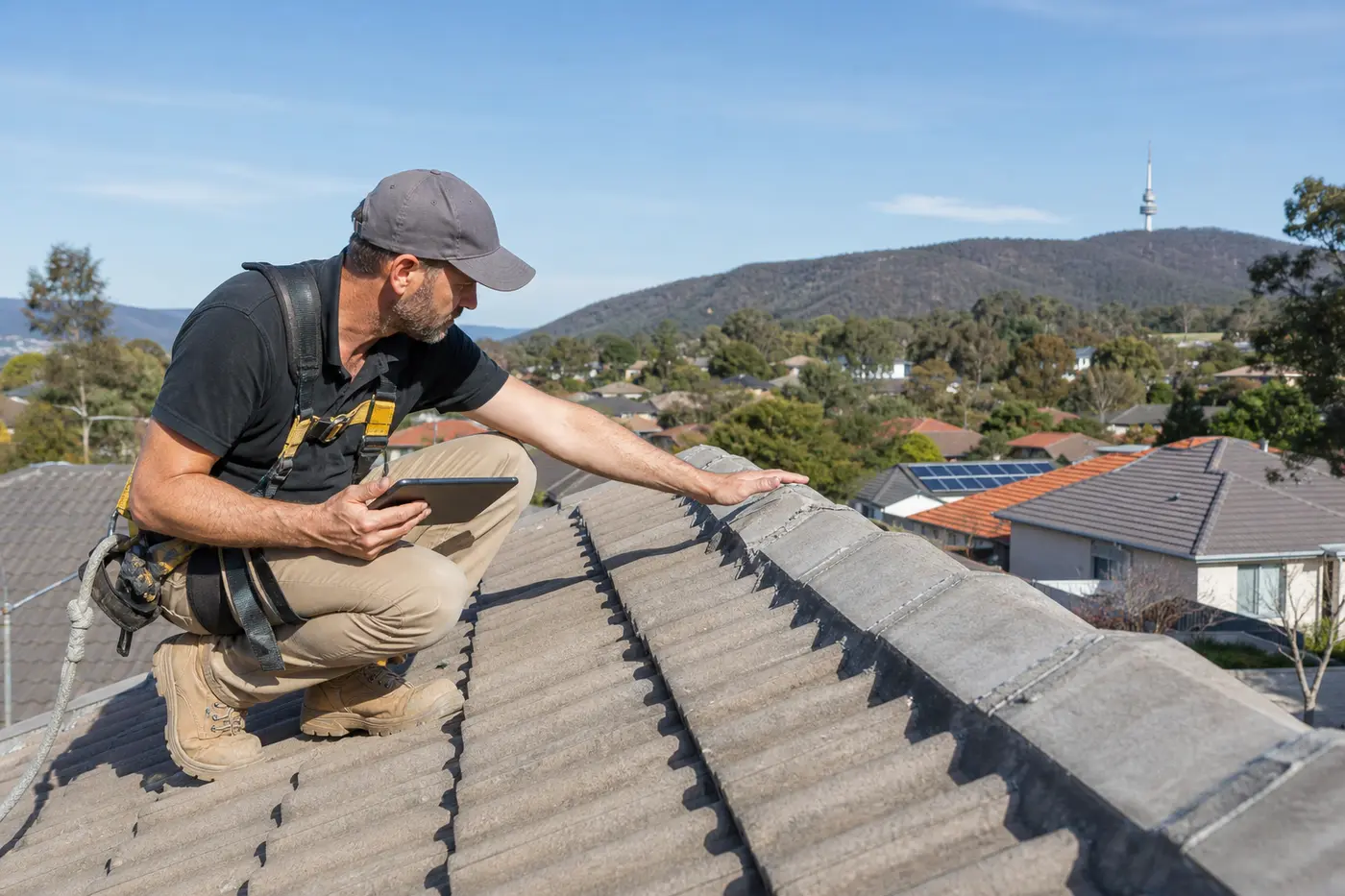
Most people don't think about the roof until something makes them. A brown mark shows up on the ceiling. A storm rolls through and a neighbour mentions their cracked tiles. Or you're about to buy a house and the building report barely mentions the one part of the home whose whole job is keeping the weather out. That's usually the moment someone books a roof inspection in Canberra, and it's a sensible move. The catch is that "roof inspection" means very different things depending on who turns up and why.
So here's a straight explanation of when getting your roof looked at is actually worth it, what a proper check covers, and how to tell a genuine assessment from a five-minute look designed to sell you a job.
The times a roof check earns its keep
You don't need someone on your roof every year for the sake of it. But there are a handful of moments where a look pays for itself, sometimes many times over.
- Before you buy a house. A standard building inspection often doesn't get anyone onto the roof itself, so tile and flashing problems slip through. The roof is one of the most expensive things to fix after settlement.
- After a big storm or hail. Canberra gets both. Damage frequently isn't visible from the ground, and insurers want it documented promptly.
- When a leak or a stain appears. A mark on the ceiling almost always means water is already getting in somewhere above it.
- Before you sell. Knowing what a buyer's inspector will find puts you in front of the conversation instead of behind it.
- When the roof is 20 years old or more and has never been touched. Most tile roofs we look at around Canberra are 20 to 40 years old, and the bedding and pointing don't last forever.
- Before you commit to a restoration or a repaint. A coat of paint over a roof with cracked tiles or failed pointing is money down the drain.
What a good roof inspection actually looks at
A real inspection is more than a glance and a thumbs up. On a tile roof, the person up there should be checking the tiles themselves for cracks and slippage, the ridge capping, and the pointing and bedding that hold that capping in place. On a metal roof it's the fasteners, the flashings, and any rust starting on sheets or around penetrations. Either way, the details that cause most leaks live in the same spots.
- Valleys and flashings, where two roof planes meet and water is funnelled hardest.
- Gutters, downpipes and box gutters, including how well they actually drain.
- Penetrations: vents, skylights, the flue and anywhere something pokes through the roof.
- The sarking or underlay, where it can be seen.
- Inside the roof cavity, looking up for daylight, damp timber, mould and old water stains.
Just as important is what you get afterwards. A photo of a problem you can't see from the ground is worth far more than someone telling you it exists. That's the difference between an inspection you can act on and one you just have to take on faith.
Free inspection or paid report? They are not the same thing
This one trips people up, so it's worth being clear. Plenty of Canberra roofers, us included, offer a free inspection that comes with a photo report and a quote for any work needed. It's genuinely useful for finding out what's going on up there and what it would cost to put right. If you want that, you can book a free roof inspection with a photo report and go from there.
A pre-purchase or independent condition report is a different animal. It's usually paid, it's written for a buyer or for a dispute, and it deliberately doesn't come attached to a quote from the person writing it, so there's no conflict of interest. Both are valid. Pick the one that matches why you need it. If you're buying, weighing up a legal position, or just want a second opinion with no sales pitch, an independent paid report is the right tool. For everything else, a free check tells you plenty.
Why Canberra roofs earn a look more than most
Our climate is hard on roofs in ways coastal cities aren't. Frost and sub-zero nights work water into hairline cracks and split tiles a little wider each winter. Hail does damage you often can't see from the driveway, which is why knowing how to spot hail damage on your roof matters after a rough season. And our leafy older suburbs drop enough gum leaves to block a gutter in a fortnight, which backs water up under the tiles.
Add the age of the housing stock. A lot of Canberra homes went up in the 1970s and 80s with concrete tiles that are now well past their first repointing. None of that is a reason to panic. It is a reason to know the condition of your roof rather than guess, especially once a water stain starts spreading across a ceiling and the damage is already underway.
Can you check the roof yourself first?
Some of it, yes, and it's worth doing before you call anyone. From the ground with a pair of binoculars you can spot slipped or cracked tiles, rusty patches, sagging gutters and lifted flashing. Inside, get into the roof space on a sunny day and look for pinpricks of daylight and any dark staining on the timber.
What you should not do is walk around on the roof. Tiles are brittle, frost makes them slippery, and the ones that look fine can crack under your weight and create the very leak you were checking for. Falls from roofs put people in hospital every year. Leave the walking about to someone with the gear and the licence for it.
What happens once the inspection is done
A good inspection ends with a plain explanation, not a scare campaign. Sometimes the honest answer is that the roof is sound and you should leave it alone for a few years, and that's a perfectly good outcome. Where work is needed, you should get it laid out clearly with the photos to back it up, so you can see what you're paying for and why. As a licensed ACT roof plumbing business, we'd rather tell you a roof has life left in it than sell you a job it doesn't need. Any work we do carry out is backed by up to a 15-year warranty on selected services.
If your roof is due a look, whether it's before a purchase, after a storm, or just because you can't remember the last time anyone checked, arrange a roof check with our Canberra team and you'll get an honest report with photos and no pressure to sign anything.