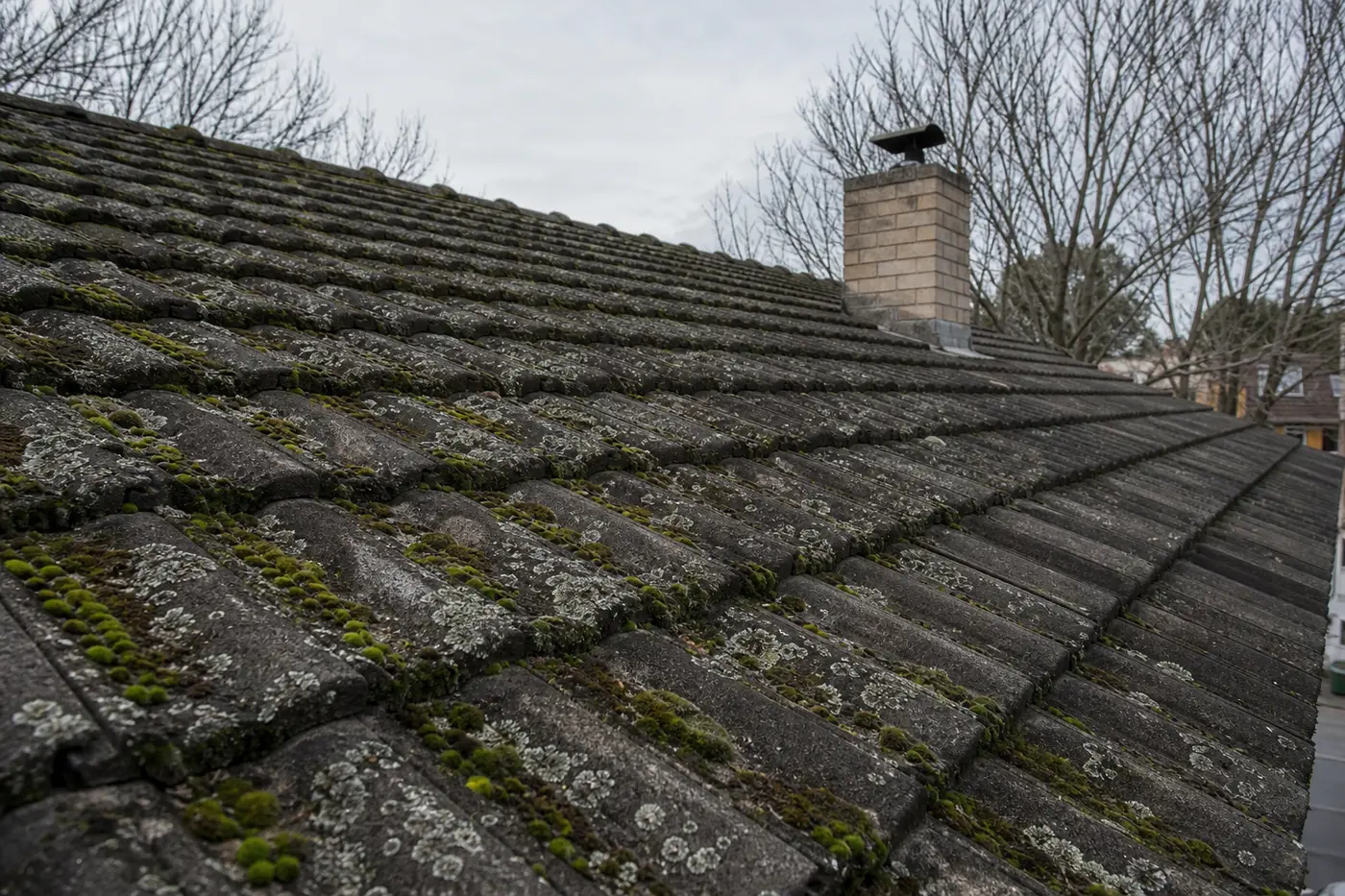
You spotted it from the driveway, or maybe a neighbour said something. A patch of green fuzz creeping across the tiles, usually on the shady side, with grey-green crusty spots mixed in. On a lot of homes here it shows up first on the southern slope, the side that never really dries out. Most people leave it, figuring it's just a bit of green and the roof still does its job. Sometimes that's the right call. Often it isn't, and the catch is you can't tell which from the ground.
So here's what moss and lichen on a Canberra roof are actually doing up there, when it tips from a cosmetic thing into a real problem, and the safe way to get on top of it.
What the green is actually doing up there
Moss works like a sponge. It sits on the tile and holds water against the surface long after the rest of the roof has dried off. Tiles are meant to shed water fast and dry out between showers. Concrete and terracotta are both slightly porous, so once moss keeps them damp for weeks at a time, that moisture soaks in.
On a warm coast that might not matter much. In Canberra it does, because of what happens overnight. Water sitting in a damp tile freezes, expands and pushes the tile apart from the inside, then thaws by mid-morning. Do that a few hundred times over a few winters and you get hairline cracks, then flaking, then a tile that lets water through. We went into that freeze-thaw cycle in our guide to frost and winter roof damage. Moss just speeds it along by keeping everything wet for longer.
The flat grey-green crusty stuff is lichen, and it's more stubborn than moss. It bonds hard to the surface and, on an older roof, works into the top layer of the tile or whatever coating is left. Black streaks and staining are usually algae or mould. Different growths, same root cause: a roof that stays damp and shaded.
Why Canberra roofs grow so much of it
It isn't that your roof has been neglected. It's the conditions. Moss and lichen want cool, damp and shade, and plenty of our streets tick all three. Cold winters, heavy frosts and slow-clearing morning dew keep roofs wet well into the day. South-facing slopes and anything sitting under a big established gum barely catch direct sun through winter. A lot of the older suburbs are leafy and tree-heavy, so roofs collect leaf litter that traps moisture and feeds the growth.
Then there's the age of the housing. Canberra has a lot of concrete-tile roofs from the 70s and 80s with their original surface long worn off. Bare, porous tile soaks up damp and hangs onto it, which is exactly what moss is looking for. Put all that together and a green roof around here is closer to normal than the exception.
When it's just a look, and when it's a problem
Plenty of moss is honestly just cosmetic. A light green film on a sound, well-sealed roof isn't doing much beyond making the place look tired. The point where it stops being cosmetic is when it starts moving water where water shouldn't go. A few things worth watching:
- Moss growing thick along the tile overlaps, where it can push water sideways under the tile instead of letting it run off the top.
- Clumps breaking loose and washing down into the gutters, where they rot into sludge and choke the flow. If your gutters overflow in every decent downpour, moss shedding off the roof is often part of the story. Our post on what blocked gutters do to a roof covers where that ends up.
- Growth sitting in tiles that are already cracked or slipped, so water has a way in and the moss is holding it there.
- A roof where the coating has clearly gone and the green is growing straight onto bare tile.
Any of those and it's worth having someone up there for a proper look, because from the ground you genuinely cannot tell a surface stain from a tile that's on its way out.
Why blasting it off yourself usually costs more than it saves
The instinct is to borrow a pressure washer and go at it on a dry Saturday. I'd think twice. A tile roof is a rough place to learn, and it catches people out two ways.
First, the tiles. Full-pressure water cracks old tiles, strips off what little protective coating is left, and drives water up under the overlaps and into the roof space. We've been called to leaks that started the weekend someone cleaned their own roof. Second, and this matters more, is the fall. A wet, mossy tile roof is properly slippery, and our pitches aren't gentle. It isn't worth the risk.
Done right, moss and lichen come off at the correct pressure for that particular roof, often a softer wash paired with a treatment that kills the growth at the root rather than just scrubbing the green off the top. That last part is the bit that counts. Brush the surface and it's back within a year. Treat the root and it stays away far longer. A proper roof clean also finishes with the gutters cleared of everything that has washed down, so you aren't just shifting the problem three metres. And if the roof turns out to need more than a wash, that's the moment to find out, while someone is already up there with eyes on it.
Getting on top of it before the next frosts
If there's moss or lichen spreading across your roof and you're not sure whether it's cosmetic or the start of something dearer, get it looked at before winter sets in properly. We offer a free roof inspection with a photo report, so you can see exactly what's happening up there without going near a ladder, and we'll tell you straight whether it needs a clean, a repair, or nothing yet. We're licensed roof plumbers (ACT Roof Plumber Licence 242220C) and we back selected work with a warranty of up to 15 years. If you'd like the green sorted properly, book a roof clean with us. A roof built Canberra-tough, frost and all.