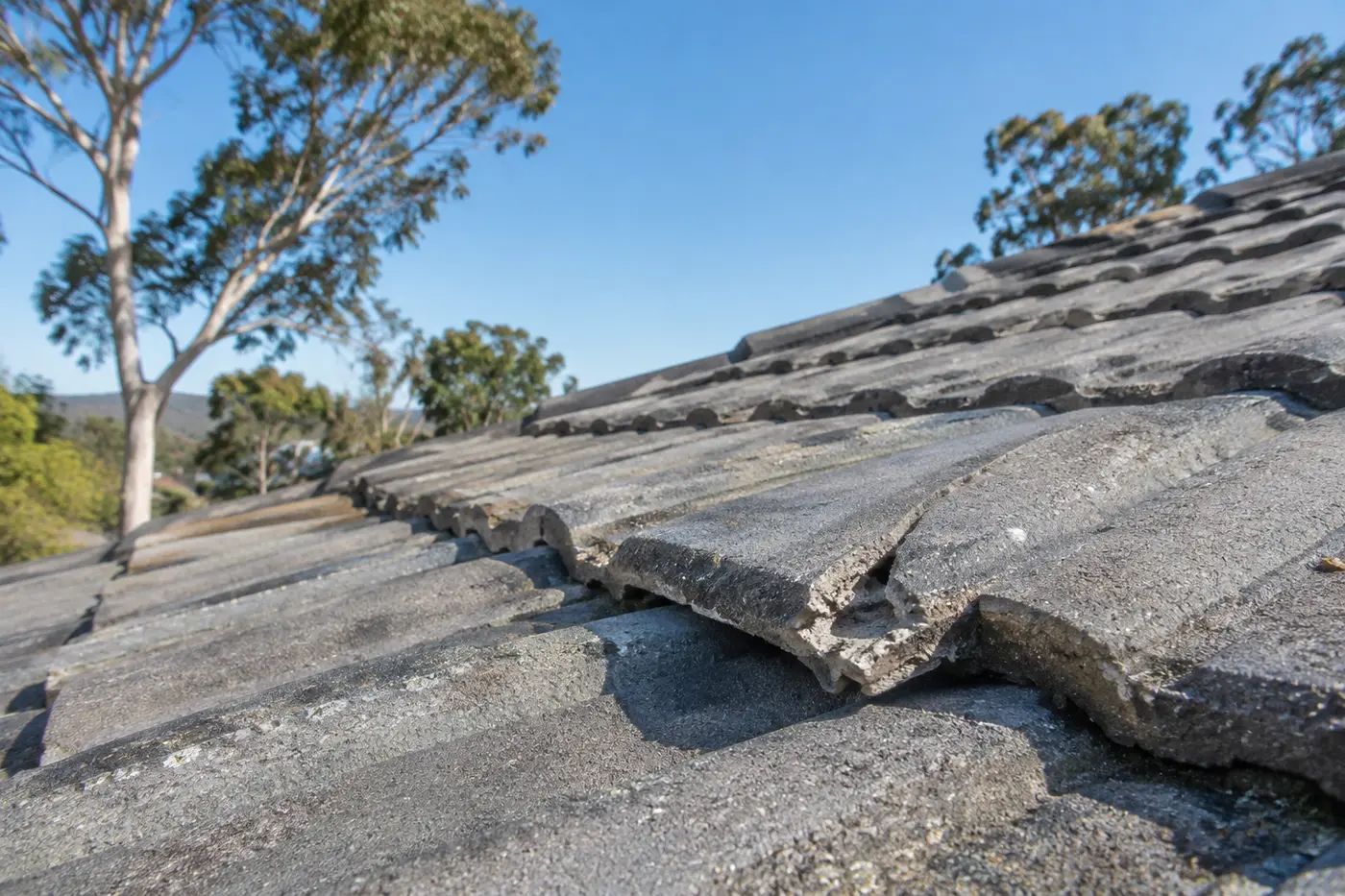
The solar panels went on last week. This morning you found a curved piece of orange tile sitting in the garden bed under the eaves, and now you are standing on the lawn squinting at the roof, trying to work out where it came from. Nothing is leaking. Yet.
Cracked roof tiles are one of the most common things we find on Canberra homes, and one of the easiest to put off. A single crack looks harmless from the ground. The trouble is what it does over the next storm or the next winter, and that is what this guide is about: why tiles crack here, how a small crack turns into a wet ceiling, and how to tell a quick repair from a sign the whole roof needs attention.
One cracked tile can let in more water than you'd expect
A tile roof works by overlap. Each tile sits over the one below it, so rain runs from tile to tile down to the gutter without ever finding a gap. Crack one tile and that chain breaks. Water drops through the crack onto the timber battens, then runs along them or soaks into the insulation before it finds a way down.
That is why the stain on your ceiling is often nowhere near the broken tile. We often trace a hallway leak back to a crack well uphill of the stain. Plenty of older Canberra homes were also built without sarking (the foil layer under the tiles that acts as a second line of defence), so there is nothing to catch the water once it gets past the tile.
Slow leaks are the ones that cost money. A few drips per storm can rot battens, ruin insulation and stain plasterboard for months before anyone notices.
Why tiles crack on Canberra roofs
Most cracks we see come down to a handful of causes. Often it is more than one at once.
Foot traffic. We see this one all the time. Tiles are strong when they are sitting flat and evenly supported, and weak when someone puts their full weight on the middle of one. Antenna installers, solar crews, air conditioning techs and anyone who climbs up to clean the gutters can crack tiles. If something has recently been installed on your roof, that is the first place we look.
Hail. Canberra's summer storms can crack tiles clean through or leave hairline fractures that only open up later. If the cracks appeared after a storm, our guide to spotting hail damage on a Canberra roof covers what else the same storm may have done.
Frost. As a tile ages it loses its surface coating and starts soaking up water. On a frosty night that water freezes and expands inside the tile. Do that every winter for decades and small cracks open and spread. Concrete and terracotta wear in different ways here, which we explain in our comparison of concrete and terracotta tiles.
Branches and debris. A falling limb from a eucalypt can break a row of tiles in one go, especially in our leafier older suburbs.
Age and movement. Houses move a little as they settle and as the seasons change. Over time tiles get pushed out of line, rub against each other and crack at the corners where they overlap.
Signs you can spot without climbing up
Please don't get on the roof to check. Tiles that are already cracked break further underfoot, and a fall from a single storey roof is serious. Most of the early clues are visible from the ground or the ceiling space:
- pieces of tile in the gutter, on paths or in garden beds
- a tile sitting higher or lower than its neighbours, or slipped out of line
- daylight showing through the tiles when you look up from inside the roof space
- damp or stained insulation, or water marks on the battens
- a brown ring on the ceiling that grows after rain
Hairline cracks are the hard part. They often don't show from the ground at all, and they are the ones frost opens up next winter.
A dab of silicone is a stopgap, not a repair
If you search for how to fix a cracked roof tile, you will find plenty of advice to glue it back together with silicone or a patch product from the hardware store. We understand the appeal. It looks cheap and quick.
In practice it rarely lasts on a Canberra roof. Sealant breaks down in strong sun, the tile keeps moving through hot days and frosty nights, and the bond lets go. A glued tile is also weaker than it was, so it tends to crack again beside the old line. Worst of all, a bead of sealant can hold water against the tile and send it somewhere you can't see. We treat a siliconed tile as a temporary patch until it can be replaced.
Replacing a cracked tile properly means matching it
A proper fix is to lift the tiles around the broken one, slide in a sound tile of the same profile, check the battens and neighbouring tiles while they are exposed, and then lay everything back so the overlaps sit tight. If the crack is in a ridge or hip cap, the cap is rebedded and pointed with a flexible compound that copes with frost movement better than old rigid mortar.
The fiddly part is finding a match. Many of the tile profiles on 1970s and 1980s Canberra homes are no longer made. Where a new tile won't fit, the usual answer is a salvaged tile of the same profile, or swapping a sound tile in from a less visible spot such as the back of a garage roof and putting the closest match there instead. The colour may not be perfect on day one, but a tile that fits properly keeps water out. A slightly different shade is a cosmetic issue. A tile that doesn't seat properly is a leak.
Our cracked tile and leak repair service covers broken, drummy and slipped tiles, replaced and rebedded to match the existing roof, and small repairs like this are quoted on the spot.
When cracked tiles point to a bigger job
A few cracked tiles after a tradesperson's visit or a single hailstorm is a repair. Cracked tiles scattered right across the roof tell a different story.
If we find cracks all over, along with tiles that have gone porous and pointing failing along every ridge, then replacing tiles one by one becomes a losing game. You fix one spot and the next one goes. That is usually the point where a restoration (clean, replace the broken tiles, rebed and repoint, then seal and coat) gives better value than another round of repairs. Leaks turning up in different places each storm are a common sign the roof's surface life is up rather than bad luck.
Occasionally the tiles themselves are failing so widely that a new roof is the honest answer. We will tell you which one you're looking at, with photos to show why.
Get a cracked tile looked at before the next storm
A cracked tile is a small, cheap fix while the timber and ceiling under it are still dry. If you have found a broken piece in the garden, noticed a tile out of line or seen a new mark on the ceiling, book a free roof inspection. We will check the crack, look over the rest of the roof while we're up there, and send you a photo report so you can see exactly what we saw. If it turns out to be a simple swap, our Canberra roof repairs team will quote it on the spot.